It wasn’t just a backdrop. It was the whole point.
The father of the bride house is one of those movie locations that people genuinely can’t stop thinking about — decades after the film came out, after the sequels, after the Netflix remake, people are still searching for it, driving past it, and posting about it like it’s a pilgrimage destination. And honestly? That makes complete sense. Because that house wasn’t just a set. It was a character.
Let’s talk about where it actually is, what it looks like in real life, and why people are still obsessed with it in 2025.
The House That Made Pasadena Famous
The 1991 film Father of the Bride — directed by Charles Shyer and starring Steve Martin, Diane Keaton, and a very young Kimberly Williams — used a real residential property in Pasadena, California as the Banks family home.
And it was perfect. That’s the only word for it.
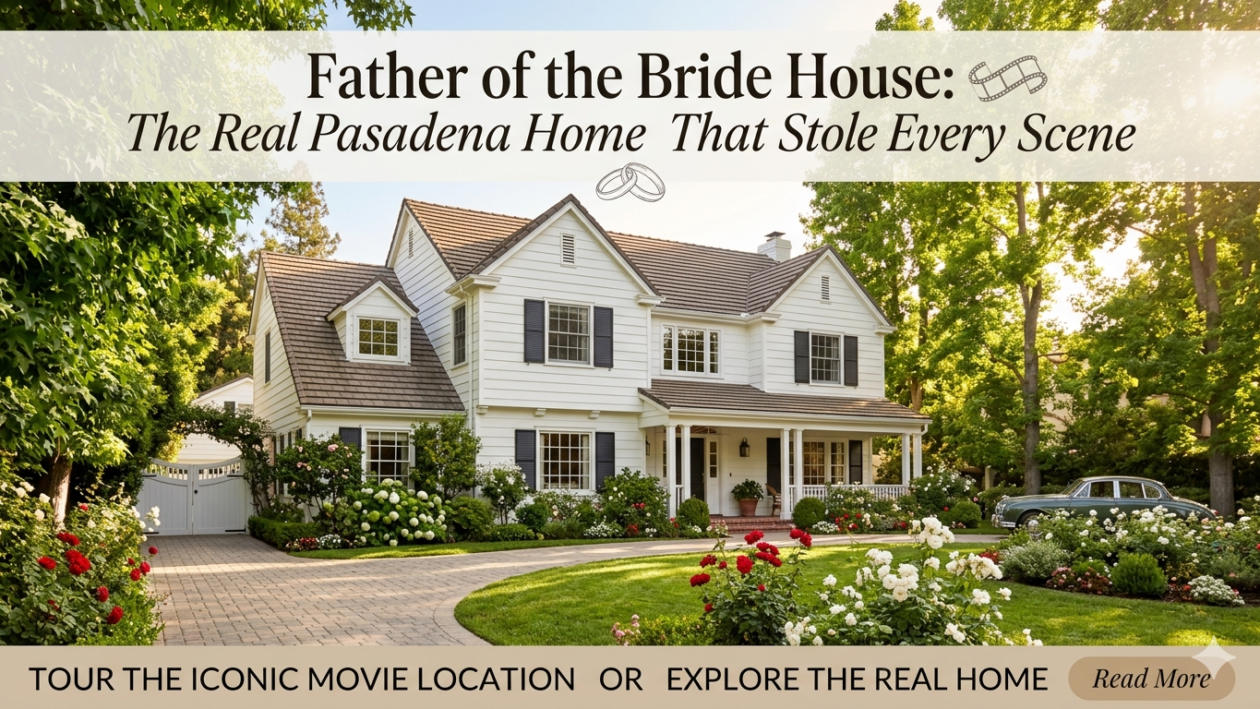
The house sits at 843 Laurel Way in San Marino, California — not technically Pasadena, but close enough that the two get used interchangeably in every online conversation about it. It’s a colonial-style home with white shutters, a wide front porch, a manicured lawn, and the kind of architectural warmth that makes you feel nostalgic for a childhood you may not have actually had.
THIS MOMENT DEMANDS TRUTH.
In a deeply divided country, journalism is a safeguard.
Already a member? Log in to hide these messages.
That’s a very specific emotional trick. The house pulls it off effortlessly.
Where Is the Father of the Bride House, Exactly?
People search this constantly. So let’s answer it directly.
The father of the bride house is located at 843 Laurel Way, San Marino, California 91108. San Marino is a small, affluent city sitting just east of Pasadena in Los Angeles County — quiet streets, beautiful homes, the kind of neighborhood where every house looks like it belongs in a film. Which, in this case, one literally does.
It’s a private residence. Has been the whole time. Was a private residence when they filmed there in 1991, and it still is today. Which means the people who live there have spent over three decades being the unexpected custodians of one of America’s most recognizable movie homes.
Was that what they signed up for? Probably not entirely.
What the House Actually Looks Like Up Close
The exterior is the star. Everyone knows it.
Two stories. White painted brick. Black shutters flanking every window. A covered front porch that runs the width of the house. A classic center-hall colonial layout that communicates stability, warmth, and the kind of upper-middle-class comfort that the Banks family embodies throughout the film.
The front lawn — where Steve Martin has his nervous breakdown over wedding costs — is exactly as it appears on screen. Wide. Green. Perfectly kept. The kind of lawn that whispers “someone cares deeply about this property” without being ostentatious about it.
And the interior? The production design team created most of it on a soundstage. So the kitchen where the hot dog bun meltdown happens, and the living room where the family processes every emotional beat of the film — those were built sets, not the actual house interior.
But the outside? That’s all real. And that’s all most people need to see.
The Father of the Bride Home Across Three Decades of Film
Here’s what makes this house genuinely unusual in movie location history.
It showed up in the original 1991 film. It came back for Father of the Bride Part II in 1995. And when Netflix released a remake in 2022 — updated, bilingual, set in Miami — people immediately noticed the original house was gone and had opinions about it.
Strong opinions.
Because the father of the bride home isn’t just a location in these films. It’s the emotional anchor. The whole story is built around the idea that this house represents something — family, stability, the specific grief of watching a chapter close. When Annie says she’s moving out, the house is why it hurts. When the parents stand in the empty room, the house is the feeling.
You can’t replace that with a Miami modern renovation and expect nobody to notice.
They noticed.
Why People Still Drive Past It Today
Let me be clear about what’s happening when someone makes the drive to 843 Laurel Way.
They’re not just looking at a house. They’re checking on a feeling. Making sure the thing that represented something to them — family, nostalgia, the particular warmth of a certain kind of American domestic life — is still standing and still looks the way they remember.
And it does. It really does.
The house in father of the bride hasn’t changed dramatically since filming. The neighborhood is quiet and residential. Visitors show up regularly — respectfully, for the most part — take a photo from the street, and leave with something they can’t quite articulate.
Closure, maybe. Or just confirmation that some things hold.
The San Marino Location Detail Nobody Mentions
Here’s the thing about San Marino that doesn’t come up enough in these conversations.
It’s one of the wealthiest cities per capita in the entire United States. Median household income, property values, the general aesthetic of the streets — all of it runs significantly above the California average. And that context matters for the film, because the Banks family’s financial anxiety throughout the movie lands differently when you understand exactly what kind of neighborhood they’re living in.
George Banks — Steve Martin’s character — is horrified by wedding costs that most people would consider genuinely reasonable. The house he’s trying to protect that lifestyle in costs what it costs in San Marino. The comedy only works because the setting is so specific.
The location wasn’t accidental. It was the whole joke.
The Father of the Bride House and the 2022 Netflix Remake
The 2022 Netflix remake made a deliberate choice to move the story to Miami, update the family to Cuban-American, and reimagine the visual language of the whole film.
Creatively? Interesting decision. The film got solid reviews and found a genuine audience.
But the house in father of the bride — the original one, the San Marino colonial — cast a long shadow. Audiences kept comparing the new location to the old one. The Miami house was beautiful. It just wasn’t that house. And that gap between “beautiful” and “the specific house that lives in people’s memories” is wider than any production designer can close with a renovation budget.
Some locations become irreplaceable. This one did it in about ninety minutes of screen time.
What Happens If You Actually Visit
Let’s be practical for a second.
If you drive to 843 Laurel Way, San Marino, California — and plenty of people do — you’ll find a residential street in a quiet neighborhood. The house looks exactly like you’d expect. You can photograph it from the street without issue. What you cannot do is knock on the door, walk onto the property, or treat it like a tourist attraction with hours and an entry fee.
It’s someone’s home. They live there. They’ve been graciously sharing their exterior with the movie-going public for over thirty years simply by existing in a house that happened to get famous.
Respect that. Take the photo from the sidewalk. Feel the feeling. Leave.
That’s the visit. And honestly? It’s enough.
You Might Also Like : Jim Cramer Net Worth: How the Loudest Man on Wall Street Built a $150 Million Fortune
Conclusion
The father of the bride house isn’t famous because of architecture. It’s famous because of what it made people feel over the course of a ninety-minute film — and then kept making them feel every time they drove past it, watched a rerun, or explained to someone younger why a specific white colonial in San Marino matters more than it has any logical right to.
That’s what great production design does. It finds a real place and turns it into a feeling. The Banks family could’ve lived anywhere. They lived there. And that choice — that specific house on that specific street in that specific city — became one of the most quietly iconic movie locations in American film history.
It’s still standing. Still white. Still perfect.
Go see it.
Frequently Asked Questions
Q: Where is the father of the bride house located?
The father of the bride house is located at 843 Laurel Way in San Marino, California 91108. San Marino sits just east of Pasadena in Los Angeles County. It’s a private residence, not a public attraction, so visits are limited to respectful street-level viewing and photography from the sidewalk.
Q: What does the father of the bride house look like?
It’s a two-story colonial-style home with white painted brick, black shutters, a covered front porch, and a wide manicured lawn. The exterior appears virtually unchanged from how it looked during filming in 1991. The interior scenes in the film were shot on a separately built soundstage rather than inside the actual house.
Q: Was the same house used in both Father of the Bride films?
Yes. The same San Marino property appeared in the original 1991 film and the 1995 sequel Father of the Bride Part II. The 2022 Netflix remake relocated the story to Miami and used a different property entirely, which many fans of the original noted immediately.
Q: Can you visit the father of the bride house?
You can drive to the address and photograph the exterior from the public sidewalk — and many people do exactly that. But it remains a private residence, so entering the property, knocking on the door, or treating it as a formal tourist destination isn’t appropriate. It’s someone’s home first. A movie location second.