Tracqueur The GPS Fitness Tracker That Actually Works
It started with a problem everyone had but nobody solved well enough.
Tracqueur showed up in 2026 and quietly rewired how serious athletes — and completely average people — think about tracking their health. Not with a Super Bowl ad. Not with a celebrity endorsement. Just with a device that actually does what it says, backed by GPS technology precise enough to make your old fitness band look like a step counter from 2009.
So what is it exactly? Let’s get into it.
What Tracqueur Actually Is — And Why It’s Different
Honestly, the fitness tracker market is crowded. Embarrassingly crowded.
Every six months there’s a new wearable promising to revolutionize your morning run, monitor your sleep, and somehow also tell you when Mercury is in retrograde. Most of them deliver on about 40% of that. And you know it. The battery dies. The GPS lags. The app is confusing. You end up back to just counting steps the old-fashioned way.
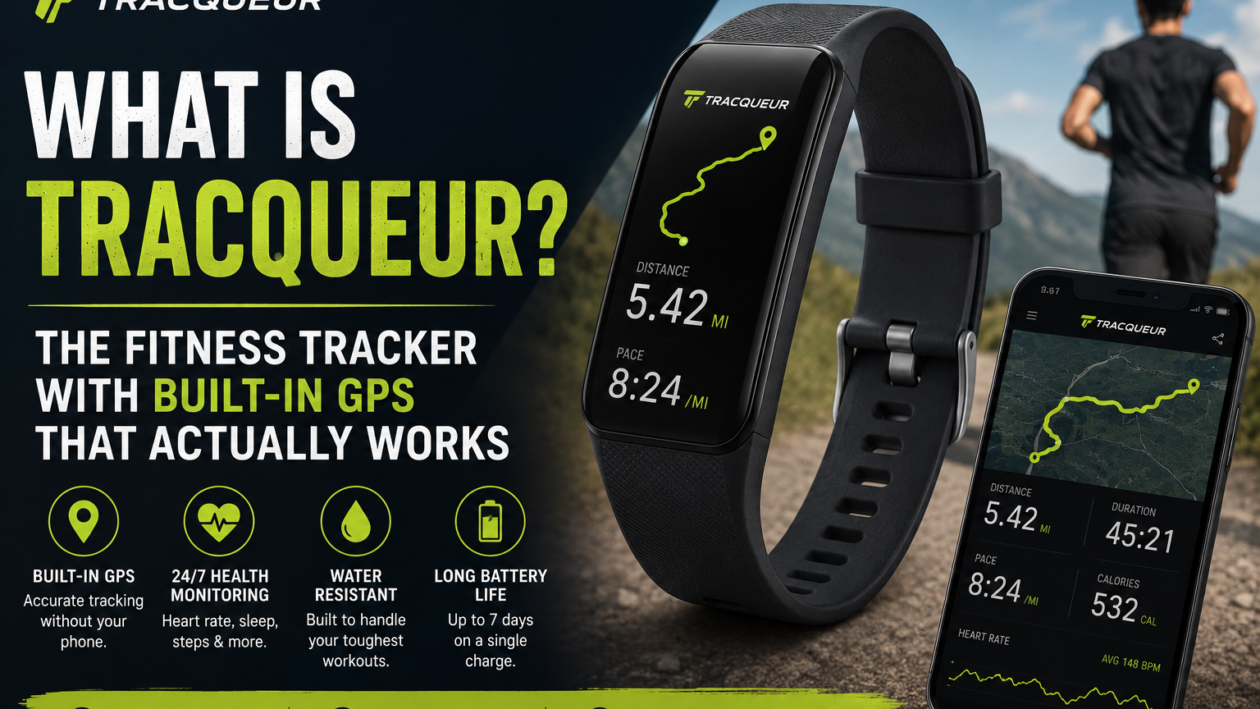
Tracqueur GPS is built differently — and that’s not marketing copy, that’s the actual differentiator. The integrated GPS means you can track your route, pace, and distance without your phone attached to your arm. You go out, you run, you ride, you hike. Tracqueur records all of it accurately without requiring you to babysit your phone throughout.
THIS MOMENT DEMANDS TRUTH.
In a deeply divided country, journalism is a safeguard.
Already a member? Log in to hide these messages.
That alone separates it from most of the competition. And it’s just the starting point.
The Features That Actually Matter
Let’s skip the spec sheet recitation and talk about what people actually use.
Real-time heart rate monitoring is the headline feature — and it works. You can see your heart rate mid-workout, stay within your ideal training zones, and stop guessing whether you’re actually working hard enough or just sweating because it’s hot outside. The difference matters more than most people realize.
Sleep tracking is another one that gets undersold in the marketing but consistently shows up in user reviews as a game-changer. Understanding your sleep quality — not just duration, but actual recovery patterns — changes how you approach training. You start connecting the dots between a bad night’s sleep and a terrible workout the next morning. Tracqueur makes that connection visible in data rather than just vibes.
And then there’s the personalized workout plans. The device adjusts to your progress over time — which sounds simple but is actually the thing most fitness trackers completely ignore. They give you the same data forever and expect you to figure out what to do with it. Tracqueur adapts. That matters.
Tracqueur GPS: The Feature That Changes Everything Outdoors
Here’s where it gets genuinely interesting for runners, cyclists, and anyone who trains outside.
Tracqueur GPS tracking is accurate enough to be useful — not just present. There’s a meaningful difference between a GPS feature that technically exists and one that gives you reliable data you’d actually trust for pacing decisions. Users consistently report the GPS accuracy as a standout, particularly for mapped route tracking on longer outdoor sessions.
Because here’s the thing nobody tells you about GPS fitness trackers — most of them require your phone nearby to function properly. They’re essentially Bluetooth bridges. Remove the phone from the equation and the GPS either disappears or degrades significantly.
Tracqueur doesn’t work like that. The GPS lives in the device. So you can leave your phone at home, run 10 miles, and come back to a complete, accurate route map. For people who train seriously, that’s not a small convenience. That’s a fundamental change in how they approach their workouts.
Who Is This Actually For?
Short answer? Almost everyone. But let’s be specific.
If you’re a serious athlete tracking performance metrics for actual training goals, Tracqueur gives you enough data depth to be genuinely useful rather than just motivational. The heart rate variability data alone gives you real recovery insights that most consumer wearables don’t provide.
If you’re someone just starting out — maybe you’ve decided this is finally the year you actually get consistent with exercise — the interface is clean enough that you won’t feel like you need an engineering degree to understand what you’re looking at. The app translates the data into actionable language rather than just dumping numbers at you.
And if you’re somewhere in the middle — committed but not obsessive, active but not professional — Tracqueur is probably most perfectly designed for you. It gives you enough without overwhelming you. That balance is harder to hit than it sounds.
How It Compares to What’s Already Out There
Let’s be real about the competitive landscape for a second.
The obvious comparison points are the major players — the established brands that have dominated shelf space and wrist real estate for years. They’re good. Nobody’s pretending otherwise. But they come with trade-offs that have always frustrated users. Battery life that requires constant charging. Price points that assume everyone has unlimited budgets. Feature sets that keep expanding into territory that has nothing to do with fitness.
Tracqueur’s battery performance stands out specifically in comparison to the frequent-charging frustration that defines the category. Users report extended usage without the constant plugging in that makes some competitors feel more like a phone than a fitness tool. And the pricing positions it as genuinely competitive for what you get — not cheap in a way that signals corners were cut, but not inflated in a way that’s hard to justify against actual performance.
The app integration is also notably cleaner than most competitors. Syncing your data shouldn’t feel like a technology project. With Tracqueur it doesn’t.
What Real Users Are Actually Saying
The testimonials that keep appearing across reviews share a consistent theme — and it’s not the features people expected to love.
It’s the consistency. Users keep coming back to the idea that Tracqueur is reliable in a way that changes how they relate to their training. One runner noted her pace measurably improved after weeks of using the GPS tracking to monitor splits she’d previously only estimated. Another user flagged the sleep data as the thing that quietly changed her recovery approach more than any other feature.
And the community element — the in-app challenges and shared fitness goals — gets mentioned more than you’d expect. Because it turns out that even people who train alone want the occasional reminder that other people are doing the work too.
The Bigger Picture Nobody’s Talking About
Fitness technology has spent the last decade getting more complicated. More features. More sensors. More data. More apps to manage the data about the data.
Tracqueur made a quieter bet — that what people actually need isn’t more complexity. It’s better execution of the things that already matter. Accurate GPS. Reliable heart rate tracking. Sleep data that’s actually interpretable. A battery that lasts. An app that doesn’t require a tutorial.
That’s it. And somehow, in a market full of gadgets trying to do everything, building something that does the fundamentals exceptionally well turns out to be the radical move.
You Might Also Like : Gaymetu E: The Digital Identity Movement Nobody Saw Coming But Everyone Needed
Conclusion
Tracqueur didn’t reinvent fitness tracking. It just did it properly.
In a category defined by overpromising and underdelivering, a device that’s accurate, reliable, long-lasting, and genuinely useful for both beginners and serious athletes is rarer than it should be. The integrated Tracqueur GPS alone justifies serious attention from anyone who trains outdoors. The sleep tracking, personalized plans, and clean app integration make the rest of the value case almost too easy.
Is it perfect? Nothing is. But is it the most complete package available at its price point in 2026?
Honestly — yes. And the people using it every day already know that.
Frequently Asked Questions About Tracqueur
Q: What is Tracqueur and what does it do?
Tracqueur is a 2026 fitness tracker designed for both everyday users and serious athletes. It combines real-time heart rate monitoring, integrated GPS tracking, sleep analysis, personalized workout plans, and app connectivity into a single wearable device. Unlike many competitors, its GPS works independently without requiring a smartphone nearby — which is one of its most consistently praised features.
Q: How accurate is Tracqueur GPS compared to other fitness trackers?
Tracqueur GPS is built into the device itself rather than relying on a connected smartphone, which gives it a meaningful accuracy advantage for outdoor training. Users consistently rate the GPS as one of its strongest features, particularly for mapped route tracking during runs, cycling, and hikes where phone-dependent trackers tend to underperform.
Q: Who is Tracqueur best suited for?
Tracqueur works well across a wide range of users — from beginners just starting their fitness journey to experienced athletes tracking detailed performance metrics. Its interface is clean enough for newcomers to navigate easily, while its data depth — particularly heart rate variability and sleep recovery insights — gives serious trainers genuinely useful information for optimizing performance.
Q: How does Tracqueur compare to other popular fitness trackers in terms of battery life and price?
Battery life is one of Tracqueur’s standout advantages over competitors, with users reporting significantly longer usage between charges compared to leading brands. On pricing, Tracqueur positions itself as competitive value — offering advanced features like independent GPS and sleep tracking at a price point that doesn’t require the kind of justification that premium-tier competitors demand.
Track more.
Guess less.
Always.