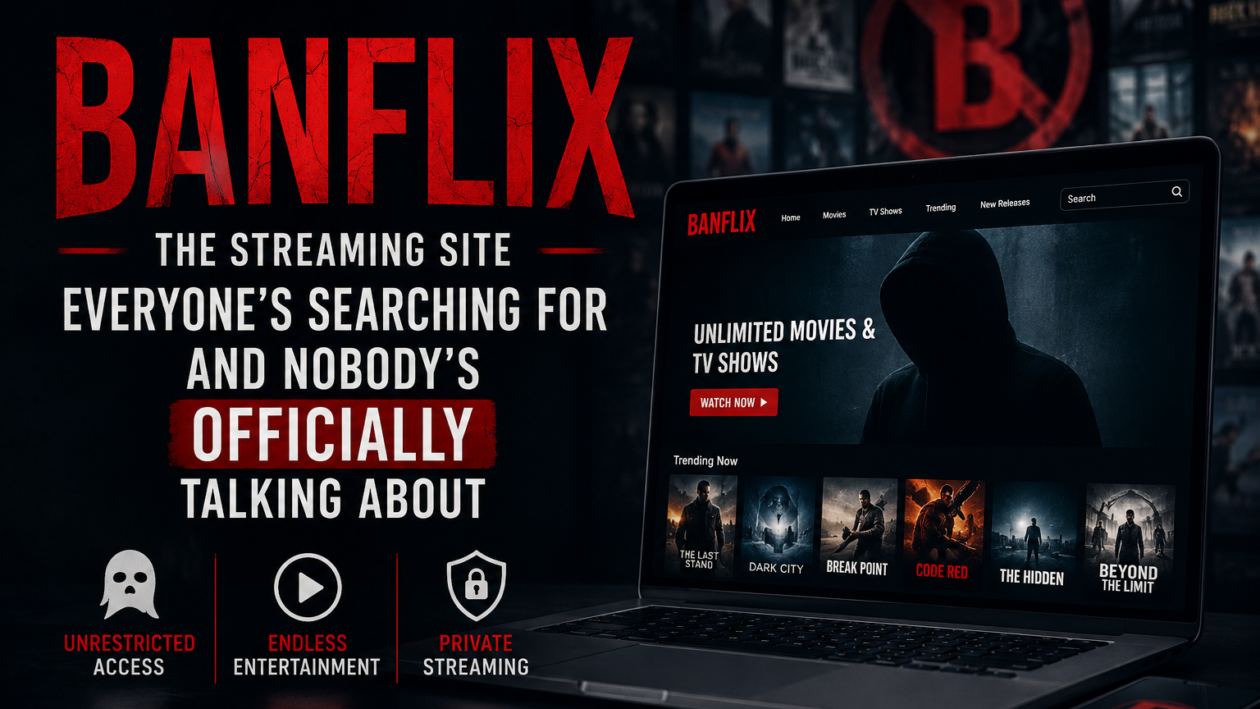
It showed up. People noticed. And the internet did what it always does.
Banflix started appearing in search trends with the kind of quiet momentum that usually means one of two things — either something genuinely useful found its audience organically, or something controversial is spreading faster than the people behind it expected. In this case, it’s a bit of both. Searches for banflix and its associated domains have been climbing steadily, and the questions people are asking about it are getting more specific by the week.
So let’s actually talk about it.
What Is Banflix and Why Is Everyone Suddenly Searching for It?
The name alone does a lot of work.
Banflix — part “banned,” part obvious streaming giant rhyme — positions itself immediately as an outsider platform. Something edgy. Something that exists in the spaces where mainstream services won’t go. Whether that framing is earned or just clever branding depends entirely on what you’re actually looking for when you type it into a search bar.
The platform operates primarily through banflix.top, with some traffic also pointing toward banflix.com depending on region and when you’re searching. Both domains surface when people go looking, though the experience and content availability can vary. Truthfully, the domain situation alone tells you something — platforms with a stable, single home address tend to have a different kind of permanence than ones that float across multiple URLs.
THIS MOMENT DEMANDS TRUTH.
In a deeply divided country, journalism is a safeguard.
Already a member? Log in to hide these messages.
And floating across URLs is a thing worth paying attention to.
The Content Question Nobody Answers Directly
Here’s where it gets interesting.
Streaming platforms that build identity around being “banned” or operating outside mainstream channels tend to attract a very specific kind of user. Some are genuinely just looking for content that’s hard to find elsewhere — regional films, older titles that fell off major platforms, documentaries that didn’t get wide distribution. That’s a real audience with a real need, and honestly, they deserve better options than they currently have.
But. Some platforms use that outsider positioning as cover for something else entirely.
So which is Banflix? That depends on which version of the site you hit, which day you visit, and what the content library actually looks like when you get there. The honest answer is that user reports are mixed — and mixed reports on a streaming platform are almost never a great sign.
Banflix and the Broader Pattern of Shadow Streaming
Let’s be real about what’s actually happening in this space.
The streaming landscape has gotten expensive, fragmented, and genuinely annoying to navigate. You need four subscriptions to watch everything you actually want. Prices went up. Password sharing got cracked down on. And the content that used to justify those prices keeps getting pulled, cancelled, or buried under algorithm-driven garbage nobody asked for.
That environment created a massive appetite for alternatives. And wherever there’s appetite, someone builds a plate — whether the food on it is safe to eat or not. Banflix sits in that exact ecosystem. It’s not alone. There are dozens of platforms operating in similar territory, with similar name structures, targeting similar frustrations.
The difference is how they handle the legal and safety side of things. Some are legitimate grey-area services. Others aren’t.
What the Domains Actually Tell You
Banflix.top is the primary search destination. Banflix.com exists as a separate landing point.
The .top domain extension is worth noting. It’s cheap, it’s easy to register, and it’s commonly used by platforms that expect to move fast and change addresses when necessary. That’s not automatically a red flag — plenty of legitimate startups use non-standard extensions. But combined with limited verifiable ownership information and mixed user experiences, it adds to a picture that deserves scrutiny rather than blind trust.
Does that mean it’s definitely dangerous? No. Does it mean you should click through without thinking about what you’re clicking into? Also no.
The SEO Mystery — Why Is This Ranking So Fast?
Here’s something genuinely curious about Banflix from a digital perspective.
The platform gained search visibility quickly. Not slowly, not through years of content building — quickly. That kind of rapid ranking usually comes from one of three things: genuine viral word-of-mouth, coordinated link-building activity, or a name that attaches itself to a trending conversation without being the original subject of it.
All three are possible here. None of them are mutually exclusive. And honestly, from a pure search behaviour standpoint, a name that sounds like “banned Netflix” was always going to attract clicks regardless of what the actual platform delivered.
The name did the marketing. The platform just had to exist.
Should You Actually Visit It?
Depends on what you’re looking for and how comfortable you are with uncertainty.
If you’re just curious and you’re visiting from a secure device with an updated browser and reasonable ad-blocking in place — the risk is relatively low. Curiosity is human. Clicking things is human. But if you’re planning to create an account, enter payment information, or download anything — those are the steps where shadow streaming platforms tend to create problems, and those are the steps worth skipping until you have much better information about who actually runs the thing.
Was the ownership publicly disclosed anywhere? Not clearly. Was there a transparent privacy policy that explains what happens to your data? Not one that came up easily. Are those things that matter? Completely.
What This Whole Conversation Is Actually About
Banflix is a symptom, not the disease.
The disease is a streaming industry that spent five years building audiences on affordable, accessible, comprehensive platforms — and then spent the next five years dismantling exactly what made those platforms worth paying for. Price hikes, content removal, account restriction, algorithmic homogenization. The whole experience got worse and more expensive at the same time, which is a special kind of achievement.
And so people go looking for alternatives. They search for platforms that promise more, cost less, and ask fewer questions. Some of those platforms deliver something genuine. Others take advantage of that frustration in ways that cost users more than a monthly subscription ever would.
The search for Banflix is really just people voting with their attention against an industry that stopped earning it.
That’s the real story.
You Might Also Like : Jimmy Connors Net Worth 2025: How Tennis’ Bad Boy Built a $30 Million Fortune
Conclusion
Banflix tapped into a real frustration at exactly the right moment — and the search numbers show it. Whether the platform itself delivers something genuinely useful, or whether it’s built more on positioning than substance, is a question that individual users are going to answer differently depending on their experience.
What’s clear is that the conversation around it isn’t going away. The appetite for streaming alternatives is real, growing, and not going to shrink until the major platforms remember that their audiences have options — including the ones that don’t come with a verified corporate address.
The internet finds a way. It always does.
And right now? It found Banflix.
Frequently Asked Questions About Banflix
Q: What is Banflix?
Banflix is an online streaming platform that operates primarily through banflix.top, positioning itself as an alternative to mainstream streaming services. It attracts users searching for content that’s difficult to find on major platforms, though its ownership, content licensing, and data practices are not clearly or publicly disclosed.
Q: Is Banflix safe to use?
User reports are mixed. Visiting the site with a secure, updated browser and ad-blocking enabled carries relatively low risk. But creating accounts, entering payment details, or downloading content from platforms without clear ownership and privacy disclosures carries significantly higher risk — and those steps are worth avoiding until more is known about who runs it.
Q: What is the difference between banflix.top and banflix.com?
Both domains appear in search results and point to related platforms, but the content availability and user experience can differ between them. The .top domain is the more commonly referenced destination. The existence of multiple domains is worth noting — established, trustworthy platforms typically operate through a single, stable web address.
Q: Why is Banflix suddenly getting so much search traffic?
A combination of factors — a name that immediately signals “alternative to mainstream streaming,” growing frustration with major platform price hikes and content restrictions, and rapid search visibility growth — drove its traffic spike. The name itself does significant marketing work by attaching to existing cultural conversations about content bans and streaming fatigue.