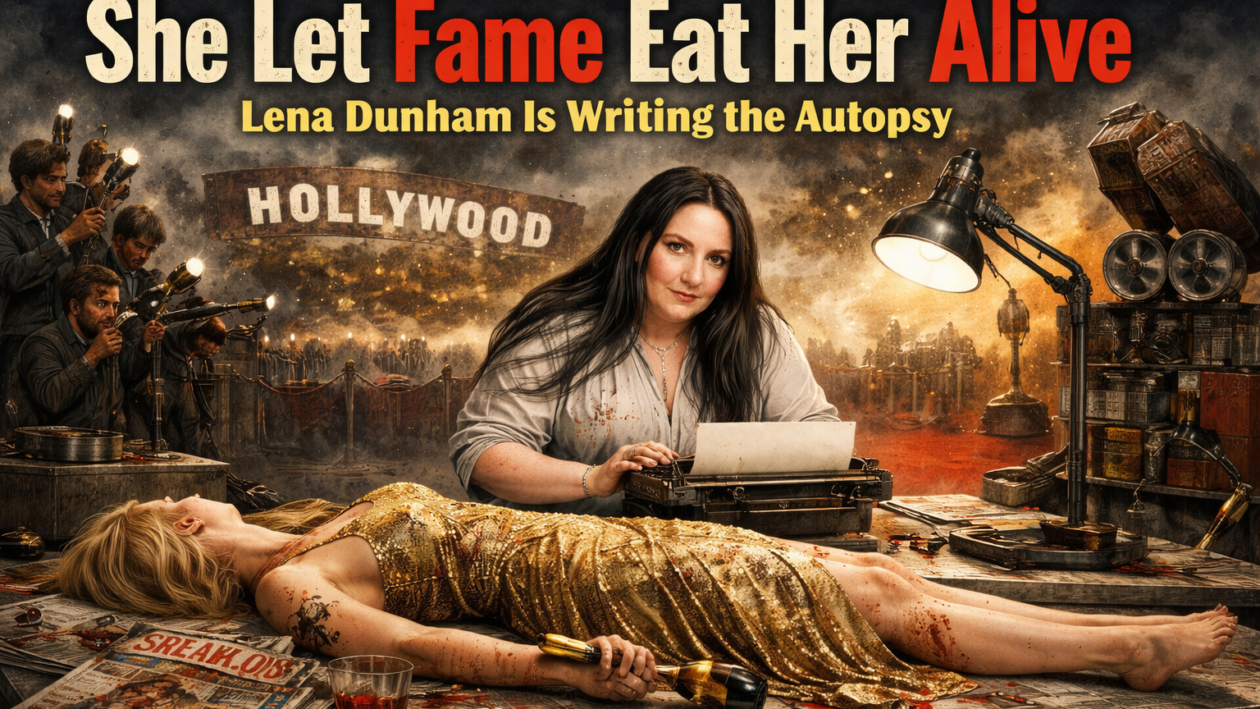
Lena Dunham never left. She just stopped being loud about it.
Now she’s back. Memoir in hand. Ready to talk about the years that nearly broke her — and didn’t.
Famesick hits shelves this week. It’s not a comeback story. It’s not an apology. It’s something rarer than both — a honest account of what fame, illness, and addiction actually feel like from the inside.
She doesn’t soften it once.
What Actually Happened to Lena Dunham
Most people have a frozen image of her. Young. Controversial. The woman everyone had an opinion about.
But here’s what was really going on. She was sick. Not metaphorically — physically, seriously sick. Endometriosis. Ehlers-Danlos syndrome. Daily pain that most people can’t imagine. She took medication to cope. To work. To show up.
THIS MOMENT DEMANDS TRUTH.
In a deeply divided country, journalism is a safeguard.
Already a member? Log in to hide these messages.
And then she couldn’t stop.
That’s the part that hits hardest. The addiction didn’t come from a dark alley. It came from prescriptions. From doctors. From trying to manage a body that kept failing her. It looked nothing like what addiction is “supposed” to look like. So she didn’t see it coming.
Neither did anyone else.
She checked into rehab in 2018. She used a fake name — Rose O’Neill, after America’s first female cartoonist. Even at her lowest, she was being poetic about it.
Girls, Adam Driver, and the Boyfriend Nobody Should Want
Nearly ten years after Girls ended, she’s still unpacking it.
Specifically, the Adam problem.
Adam Driver played a volatile, unpredictable, sometimes frightening character. And somehow, audiences decided he was romantic. They wanted a boyfriend like that. She says — clearly, firmly — that was never the point. Those dynamics were scary in real life. Lonely. But on TV, people found them exciting.
So, she wrote a whole show about dangerous behavior. And viewers made it a fantasy.
That wasn’t the plan.
She still speaks about Driver himself with real warmth. She says she learned more from him on camera than anyone else. The character he played and the person he is — two very different things. That nuance tends to disappear when people are busy picking sides.
Lena Dunham Now: Married, Sober, Still Here
So where does she land today? Pretty good, actually.
She met musician Luis Felber through a mutual friend in 2021. They married. She’s described finding with him a steadiness she hadn’t felt before. Given what the memoir reveals, that makes complete sense.
Two years sober by 2020. She directed Too Much for Netflix. She moderated events. She hosted film screenings. She kept showing up — quietly, consistently, without needing everyone to watch.
She just kept making things.
The Question That Cut Deep
The New York Times asked her recently if she’s still trying to figure out why people hated her so much.
Brutal question. Fair one.
The backlash against her was real. And intense. And honestly, not always logical. She was too raw. Too visible in her own skin. Too young to have that much power. People reacted to her like she’d personally offended them — and a lot of them couldn’t even explain why.
Meanwhile, she was getting sicker. Taking more medication to get through the day. Keeping up appearances while falling apart privately.
Was anyone paying attention to that? No. They were writing think pieces.
Why This Book Matters
A safer version of Famesick existed. One with soft edges and careful language and just enough vulnerability to seem relatable without being real.
She didn’t write that book.
She wrote about pain medication rewiring her brain. About sexual violence. About a hysterectomy at 31. About using her body as a testing ground for control when everything else felt out of reach.
This is what Lena Dunham was actually living through. Not the meme. Not the controversy. The real thing — messy, painful, and completely human.
She’s not asking for forgiveness. She’s just telling the truth.
The hot takes fade. The pile-ons get forgotten. What stays is the work.
She kept writing.
That’s enough.
That’s everything.