The internet invented a new word in 2025. And this one actually means something.
Gaymetu E showed up quietly — in gaming forums, niche Discord servers, and creator communities — before anyone in mainstream tech had a chance to slap a trend report on it. And that’s honestly what makes it interesting. It didn’t come from a brand launch or a Silicon Valley press release. It came from the ground up, from real people building digital spaces where they could actually be themselves without apologizing for it.
So what is it? Let’s get into it.
Okay But What Does Gaymetu E Actually Mean
Here’s the breakdown that makes sense once you see it.
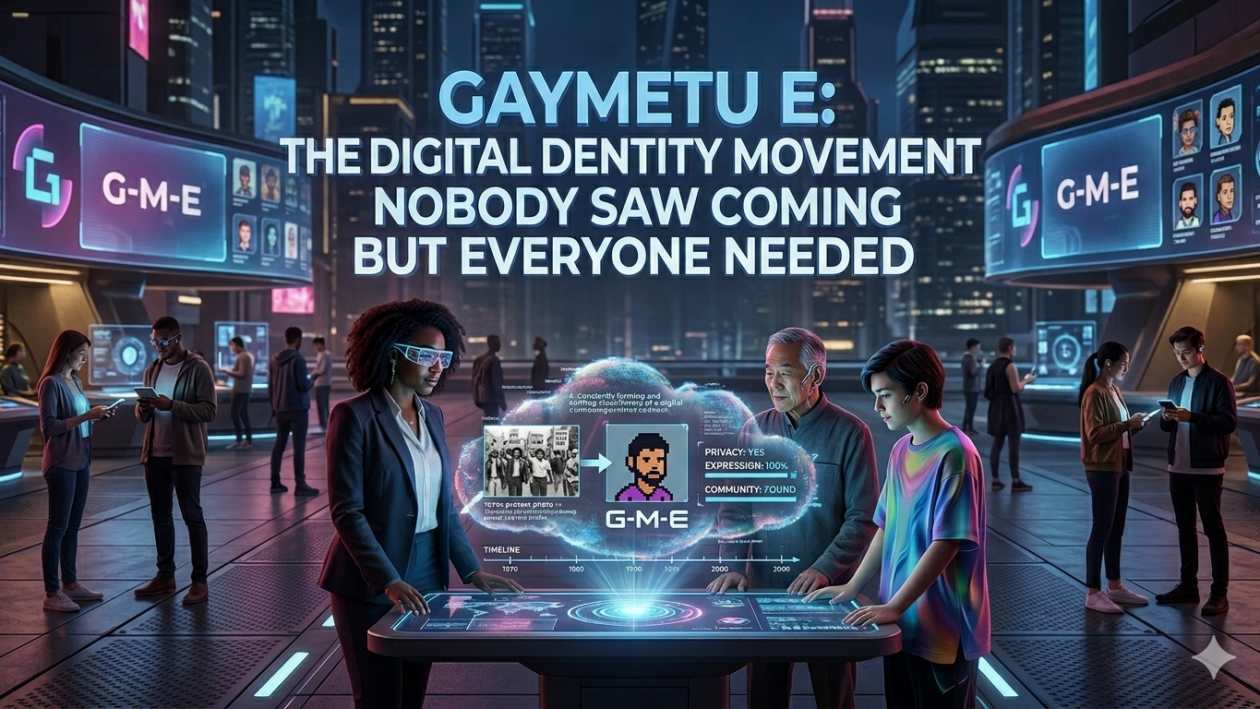
Gaymetu E is a layered term — Game plus Me plus You plus Energy or Ecosystem. That’s it. That’s the formula. But like most things that stick culturally, the formula is just the starting point. What it actually represents is the idea that digital spaces should feel human — playful, expressive, inclusive, and genuinely connected rather than algorithmically hollow.
Think of it as the emotional antidote to everything that’s gone wrong with the internet. The toxicity. The gatekeeping. The endless performance of identity rather than actual expression of it.
THIS MOMENT DEMANDS TRUTH.
In a deeply divided country, journalism is a safeguard.
Already a member? Log in to hide these messages.
Gaymetu E says: what if we just didn’t do that anymore?
Where It Came From — and Why It Caught On
No single person invented this. No VC funded it. No think piece launched it.
It emerged organically in gaming communities where players were already tired of the same thing — spaces that claimed to be for everyone but quietly sorted people out by identity, background, or how closely they matched whoever built the space originally. Inclusive gaming wasn’t a new idea. But Gaymetu E gave it a name that stuck.
And once something has a name, it spreads.
Streamers picked it up first. Then creators on TikTok and YouTube started using it as a hashtag to signal that their content was intentionally different — safer, more expressive, more human. Brands noticed shortly after. Because brands always notice when something real is happening with an audience they want.
Whether that brand involvement kills the authenticity or amplifies it — that’s the tension at the heart of the whole movement. More on that in a second.
The Three Things Gaymetu E Actually Stands For
Strip away the jargon and three consistent ideas show up every time.
Gaming and playfulness sit at the center — not gaming as competition or skill flex, but gaming as a way to explore identity. Who do you want to be when nobody’s judging the character build? That question turns out to be surprisingly revealing. And Gaymetu E takes it seriously.
Identity and expression are the second pillar. This is the part that resonates hardest with Gen Z and Gen Alpha audiences — two generations that grew up watching the internet reward performance over authenticity, and decided they were done with that trade-off. Gaymetu E doesn’t ask you to be polished. It asks you to be real.
Ecosystem and energy complete the triangle. The “E” in Gaymetu E isn’t decoration — it’s the connective tissue. Every interaction, every piece of content, every digital friendship contributes to something larger. The idea is that online spaces can either drain energy or generate it. Gaymetu E communities are supposed to generate it.
Simple. But not easy to actually build.
Gaymetu E in the Wild — What It Looks Like in Practice
Platforms like Twitch, Discord, and Roblox already host communities that run on these principles without necessarily using the term.
Flexible avatars. Identity-safe zones. Community-driven storytelling where the players shape the world rather than just inhabiting it. Streamers who genuinely know their audience’s names. Spaces with real moderation that actually removes bad actors instead of just posting a code of conduct and hoping for the best.
That’s Gaymetu E energy in action. Was there a formal announcement? No. Did those communities feel different from the average toxic gaming space? Absolutely.
Brands are starting to catch on too — and honestly, the smart ones aren’t just slapping the term on a campaign. They’re actually redesigning how they show up online. Inclusive language. Customizable experiences. Content that co-creates with the audience instead of broadcasting at them.
The dumb ones are just adding it to a press release. You’ll be able to tell the difference immediately.
Why Marketers and SEO People Should Pay Attention Right Now
Let’s be real about the business angle — because it exists and it’s worth talking about honestly.
Emerging cultural terms like Gaymetu E are genuinely rare SEO opportunities. Not because they’re tricks, but because the people searching for them are already invested in the concept. They’re not casual browsers. They’re people actively building identity-driven digital lives who want content that reflects that back at them.
Early content around this term ranks easily right now. The competition is low. The audience is engaged. And the term is only going to grow as inclusive digital culture becomes less of a niche interest and more of a baseline expectation — especially among younger audiences who grew up with it as the default.
The window to establish authority here is open. But it won’t stay open forever.
The Challenges Nobody Wants to Talk About
Every movement has weak spots. Gaymetu E has three.
The fluid meaning is the first one. Because the term is community-driven and relatively new, it means different things to different people. That’s a feature in some ways — it stays adaptable. But for brands trying to build around it, the lack of a fixed definition creates real risk. Get it wrong and the community will notice immediately.
Commercialization is the second threat. This is what kills movements. A concept that starts in a genuine community gets packaged into a marketing campaign, loses its emotional core, and becomes just another buzzword. The history of digital culture is littered with terms that survived this process and terms that didn’t.
Moderation is the third. Inclusive spaces don’t stay inclusive without active work. Trolls find every community eventually. Safe Gaymetu E spaces require real infrastructure — actual rules, actual enforcement, actual accessibility features that make participation possible for everyone. Good intentions don’t replace good moderation.
These aren’t reasons to dismiss the concept. They’re reasons to take it seriously enough to do it right.
What’s Actually Coming Next for Gaymetu E
The trajectory here is pretty clear if you follow where digital culture is heading.
AI-driven avatars and VR communities are the obvious next frontier. Imagine a digital space that actually adapts to your emotional state, communication style, or expressed identity in real time — not in a surveillance way, but in a genuinely responsive way. That’s where Gaymetu E principles are going to matter most.
Creator-led micro-communities are the second wave. The era of mass audiences following massive accounts is already showing cracks. What’s replacing it is smaller, more intimate spaces where the creator-to-audience relationship is actually a relationship — mutual, collaborative, and built on genuine shared values rather than follower counts.
And the biggest shift is the simplest. Gaymetu E stops being a hashtag and starts being a habit. A daily orientation toward building digital spaces that prioritize human connection over engagement metrics. That’s the version of this that actually changes things.
You Might Also Like : Ruby Stephens Florida Case: The Heartbreaking Story That Shocked an Entire State
Conclusion
Gaymetu E isn’t a product. It isn’t a platform. It isn’t a brand campaign.
It’s a mindset — and a surprisingly useful one given where the internet is right now. Digital spaces have spent the last decade optimizing for engagement at the expense of actual human connection. And people are exhausted by it. The toxicity, the performance, the hollowness of interactions that feel engineered rather than genuine.
Gaymetu E pushes back against all of that. Not with a manifesto. Not with a product launch. Just with the simple, radical idea that online spaces should make people feel seen, safe, and free to express who they actually are.
That’s it. That’s the whole movement.
And honestly? It’s about time.
Frequently Asked Questions About Gaymetu E
Q: What does Gaymetu E mean?
Gaymetu E breaks down into Game plus Me plus You plus Energy or Ecosystem. It’s a digital identity movement that combines gaming culture, personal expression, community building, and inclusive online spaces. The term is community-driven and intentionally layered — different people emphasize different parts of the meaning depending on how they connect with it.
Q: Where did Gaymetu E come from?
It emerged organically from inclusive gaming forums and creator communities in 2025, where players and streamers were already building spaces centered on acceptance, creative expression, and genuine human connection. No single person or brand created it — it grew from the ground up, which is a big part of why it resonates.
Q: How is Gaymetu E different from regular gaming culture?
Traditional gaming culture has historically centered on competition, skill, and a fairly narrow definition of who belongs. Gaymetu E reorients that entirely. It treats gaming as a space for identity exploration and emotional connection rather than just performance. The goal isn’t to win — it’s to belong.
Q: Can brands actually use Gaymetu E without being inauthentic?
Yes — but only if they actually live the values rather than just borrowing the language. Brands that redesign their digital spaces around genuine inclusivity, user co-creation, and identity-safe experiences can authentically align with Gaymetu E principles. Brands that just add it to a campaign tagline are going to get called out fast by communities that know the difference.
Show up real.
Build human.
That’s the whole point.